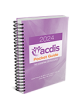






The Medical Staff Professional's Handbook
Maggie Palmer, MSA, CPMSM, CPCS; Anne Roberts, CPMSM, CPCS
- Your Price: $149.00
- Add to Cart
Product Description:
The essential medical staff professional's job manual
Let your experienced peers provide you with the guidance and training you need to tackle your toughest challenges. The Medical Staff Professional’s Handbook is a comprehensive job manual developed by medical staff professionals (MSPs) Anne Roberts, CPMSM, CPCS, and Maggie Palmer, MSA, CPMSM, CPCS. While providing much-needed education for new MSPs, this book and downloadable toolkit also offer veterans new ideas, tips, sample policies, customizable forms, and advice for improving medical staff and credentialing processes.
After reading this book, you will be able to:
- Define the roles, tasks, and expectations for MSPs to clearly identify their priorities
- Manage FPPE and OPPE processes to effectively assess physician competency
- Streamline and improve credentialing and privileging processes with dozens of customizable forms and sample tools
- Comply with accreditation and regulatory standards by understanding the MSP’s role in accreditation and the consequences of noncompliance
- Discover important tips to save time and increase efficiency on daily medical staff office tasks
- Support the medical staff and communicate with leadership
Table of Contents
- About the Authors
- Introduction
- Acronyms and Abbreviations
- Section I: The Successful Medical Staff Professional
- Chapter 1: Roles and Responsibilities of Medical Staff Professionals
- The Responsibilities of MSPs
- Who MSPs Support in the Organization
- Chapter 2: Managing External and Internal Relationships
- Navigating External Relationships
- Navigating Internal Relationships
- Chapter 3: Review of Credentialing, Privileging, and Medical Staff Standards
- History of Regulatory Agencies
- How the Standards Apply to MSPs
- Joint Commission Requirements
- What MSPs Should Expect During Accreditation Surveys
- Chapter 4: Legal and Regulatory Considerations for Medical Staff Professionals
- Managing Bylaws
- Rules and Regulations
- Corrective Action and Due Process
- Policies and Procedures
- HCQIA of 1986
- NPDB
- Healthcare Integrity and Protection Data Bank
- Sharing Information
- Credentialing Interrogatories
- Attestation, Acknowledgments, and Release Forms
- Criminal Background Checks
- Disruptive and Impaired Practitioners
- Section II : Effective Credentialing and Privileging
- Chapter 5: The Credentialing Process
- Credentialing Basics
- Rules to Guide Your Credentialing Process
- Roles and Responsibilities During the Credentialing Process
- The Application Process
- Collecting and Verifying Information
- Review and Approval Process
- Chapter 6: Credentialing Responsibilities After the Initial Application
- Orientation for Patient Care Organizations
- Credentials Expiration Tracking and Ongoing Monitoring
- Tips for Avoiding Claims of Negligent Credentialing
- Chapter 7: The Privileging Process
- Implementing a Privileging Process
- Developing Clinical Privilege Delineations
- Granting Clinical Privileges Based on Competency
- Final Recommendations for Privileges
- Chapter 8: Reappointment
- Initiating the Reappointment Process
- Accepting the Application
- Performing Primary Source Verification
- Creating the Reappointment Profile
- Quality Review, Ongoing Evaluation, and Monitoring
- Review and Approval
- Chapter 9: Credentialing and Privileging Hurdles
- Low- and No-Volume Practitioners
- Allied Health Practitioners
- Telemedicine
- Practitioner Data and Document Confidentiality
- Leaves of Absence
- Paperless/Paper-Light Credentialing System Transition
- New Technology Privileging
- Chapter 10: Temporary, Emergency, and Disaster Privileges and Expedited
- Board Approval
- Temporary Privileges
- Emergency Privileges
- Disaster Privileges
- Fast-Track or Expedited Credentialing
- Section III : Measuring Practitioner Competency
- Chapter 11: Focused Professional Practice Evaluations
- Requirements for an FPPE Policy and Process
- Developing FPPE Criteria
- FPPE at Initial Granting of Privileges
- Tracking Completion of FPPE
- FPPE for Additional Privileges
- FPPE for Cause (Ongoing Professional Practice Evaluation, Peer Review,
- Leave of Absence Reinstatement)
- Chapter 12: Ongoing Professional Practice Evaluations
- Developing a Systematic Approach to OPPE
- Developing Quality Indicators
- Periodic Performance Feedback Reports
- Section IV : Sample Forms and Policies
- Credentialing Sample Forms
- Privileging Sample Forms
- Reappointment Sample Forms
- Competency Sample Form
Continuing Education
This book has been approved by the National Association Medical Staff Services for 5 continuing education units. Accreditation of this educational program in no way implies endorsement or sponsorship by NAMSS.
About the authors:
Anne Roberts, CPMSM, CPCS, is director of medical affairs at Children’s Medical Center in Dallas, where she oversees the medical administration, graduate medical education, and medical staff services departments. As a consultant, she works with healthcare organizations across the country to prepare for regulatory surveys, revise bylaws, draft policies and procedures, and reorganize medical staff services departments.
Maggie Palmer, MSA, CPMSM, CPCS, is director of Scripps Centralized Credentialing Service (CCS) in San Diego. CCS provides credential verification services to one of the largest healthcare systems in Southern California, which includes five hospitals, managed care, surgery centers, and physician groups. Palmer currently serves as the president of the California Association Medical Staff Services.Product Types : Departments :